



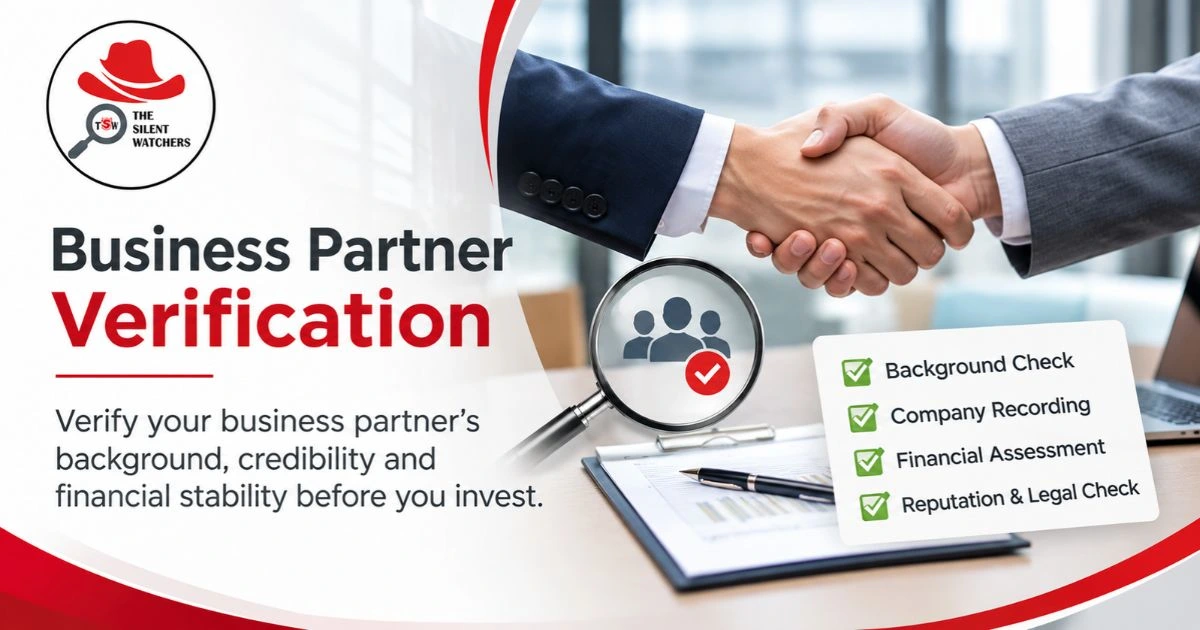
Business Partner Verification: The Smart Way to Protect Your Company Before Making a Deal
- Author : Neeraj
- Experience : 15+ Years
Building a successful business requires more than having a great product, reliable employees, and effective marketing strategies. It also depends on choosing the right people and organisations to work with. Whether you are planning to collaborate with a new supplier, investor, distributor, vendor, or business associate, knowing who you are dealing with is essential.
However, not every business relationship turns out as expected. Some companies may provide misleading information, hide financial difficulties, operate without proper registrations, or have a history of fraudulent activities. Entering into an agreement without checking these details can expose your organisation to financial losses, legal complications, and reputational damage.
This is where Business Partner Verification becomes important. It is a process of checking the identity, background, credentials, business history, and reliability of a potential business associate before establishing a professional relationship.
In today’s competitive business environment, verification is not simply an additional precaution. It is an important part of responsible business management. In this guide, we will explore why business partner verification matters, what it includes, how the process works, and how organisations can make more informed partnership decisions.
What Is Business Partner Verification and Why Does It Matter?
Business partner verification is a due diligence process used to evaluate the identity, credibility, background, and professional reliability of an individual or organisation before entering into a business relationship.
The process involves checking important information such as company registration, ownership details, financial background, business reputation, operational history, and legal records where lawfully available. It helps businesses understand whether a potential partner has the necessary credentials and whether the proposed relationship involves identifiable risks.
For example, imagine that your company is planning to appoint a new distributor in another city. The distributor promises strong market connections, an established customer network, and excellent sales performance. However, without verification, you may not know whether the business actually exists, has the required licences, or has a history of unresolved commercial disputes.
Business partner verification helps organisations make decisions based on documented information rather than promises or assumptions.
Some important areas of verification include:
- Business identity and registration details.
- Ownership and management information.
- Financial credibility and payment history.
- Legal and regulatory background.
- Professional reputation and market presence.
- Previous business relationships.
- Operational capabilities and infrastructure.
Ultimately, proper verification helps businesses establish relationships with greater confidence and awareness.
Why Is Business Partner Verification Essential for Modern Businesses?
Business partnerships can create valuable opportunities, but they also introduce risks. A company may lose money, experience supply chain disruptions, or face reputational problems if it collaborates with an unreliable organisation.
This is why businesses should evaluate potential partners before signing contracts, transferring funds, sharing confidential information, or beginning joint operations.
Business Partner Verification helps organisations identify warning signs before they become expensive problems. It also creates a more transparent foundation for professional relationships.
Here are some major reasons why verification matters:
- Reduces Fraud Risks: Helps identify suspicious identities, misleading credentials, and potentially fraudulent business activities.
- Protects Financial Interests: Allows companies to assess a partner’s financial credibility before entering significant transactions.
- Prevents Legal Complications: Helps identify certain legal and regulatory concerns that may affect a proposed partnership.
- Protects Business Reputation: Reduces the risk of becoming associated with organisations involved in questionable activities.
- Improves Decision-Making: Provides documented information that supports informed business decisions.
- Builds Professional Trust: Encourages transparency and accountability between business associates.
Furthermore, verification becomes particularly important when businesses enter high-value contracts or work with international suppliers and distributors.
Different Types of Business Partner Verification
Not every business relationship requires the same level of investigation. The verification process should depend on the nature of the partnership, transaction value, industry, geographical location, and potential risks.
A company working with a local supplier may need basic registration and operational checks. On the other hand, an organisation entering an international joint venture may require more detailed financial, legal, ownership, and compliance assessments.
Some important types of business partner verification include:
Business Identity Verification
This involves confirming whether the organisation or individual exists and whether the provided business information is genuine. Companies may check registration documents, official addresses, tax identification details, and other relevant records.
Company Background Verification
This process examines the organisation’s business history, operational experience, management structure, and previous professional activities.
Financial Background Verification
Financial checks help assess the potential partner’s financial stability. Depending on availability and authorisation, these may include financial statements, credit information, outstanding liabilities, and payment-related records.
Legal and Compliance Verification
Businesses may review relevant court records, regulatory actions, sanctions information, and compliance-related concerns through lawful and reliable sources.
Reputation Verification
This involves evaluating the organisation’s market reputation, customer feedback, supplier relationships, and publicly available business information.
Each verification category provides a different perspective. Together, they help create a more complete picture of a potential business partner.
How Does the Business Partner Verification Process Work?
A structured verification process helps organisations collect information systematically and avoid overlooking important details.
Although the exact procedure varies depending on the business relationship, most verification exercises follow a series of practical steps.
Understanding the Partnership
The first step is to understand the purpose of the proposed relationship. Businesses should identify the type of partnership, expected responsibilities, financial commitments, and potential risks.
Collecting Business Information
Next, the organisation collects relevant documents and information from the potential partner. These may include registration certificates, business licences, ownership details, official addresses, and financial documents.
Checking Official Records
The collected information should be compared with reliable official sources wherever possible. This helps confirm whether the organisation’s identity and registration details are accurate.
Evaluating Business Background
The next stage involves reviewing the partner’s business history, operational capabilities, reputation, and available professional references.
Identifying Potential Risks
Businesses should examine inconsistencies, incomplete documentation, unexplained ownership structures, and other warning signs that may require additional investigation.
Preparing a Verification Report
Finally, the findings should be documented clearly. The report can highlight verified information, unresolved questions, identified risks, and recommended next steps.
This structured approach helps management teams make informed decisions before entering into a formal agreement.
Important Documents Required for Business Partner Verification
Documentation plays an important role in verifying the credibility of a potential business associate. However, the exact documents required depend on the organisation’s legal structure, location, industry, and type of partnership.
Businesses should request relevant information through appropriate and lawful procedures. They should also handle confidential documents carefully and restrict access to authorised personnel.
Commonly requested documents may include:
- Certificate of Incorporation or business registration certificate.
- Tax registration documents, such as GST details where applicable in India.
- Business licences and industry-specific permits.
- Official business address and contact information.
- Ownership and director details.
- Authorised signatory information.
- Relevant financial statements.
- Bank account verification documents, where appropriate.
- Previous business references.
- Relevant compliance declarations.
For international partnerships, additional documentation may be required depending on the country and applicable regulations.
It is equally important to verify documents through their issuing authorities whenever possible. Simply receiving a document does not automatically establish that the information is genuine or current.
Common Warning Signs to Watch Before Entering a Business Partnership
Even when a company appears professional, certain warning signs may indicate that further verification is necessary.
Businesses should not ignore inconsistencies simply because a potential partner offers attractive pricing, promises high returns, or claims to have strong market connections.
Some common warning signs include:
- Inconsistent company registration information.
- Unverified office addresses or contact details.
- Reluctance to provide relevant business documents.
- Unclear ownership or management structures.
- Unusual payment requests or pressure for advance payments.
- Unrealistic financial promises.
- Negative or inconsistent professional references.
- Unexplained changes in company information.
- Repeated discrepancies in financial or operational records.
However, a single warning sign does not automatically prove fraudulent activity. Businesses should investigate the circumstances, verify available evidence, and give the concerned organisation an appropriate opportunity to clarify genuine discrepancies.
A careful and objective approach is always better than making decisions based on assumptions.
Business Partner Verification for International Business Relationships
International partnerships can help companies expand into new markets, access global suppliers, and develop valuable commercial opportunities. However, working across borders can also make verification more complicated.
Different countries follow different business registration procedures, regulatory requirements, taxation systems, and corporate reporting standards. Therefore, businesses should understand the legal and commercial environment of the country where their potential partner operates.
International business verification may involve:
- Checking overseas company registration records.
- Confirming ownership and management information.
- Reviewing available financial and commercial records.
- Checking relevant sanctions and restricted-party lists.
- Assessing country-specific regulatory requirements.
- Verifying international trade credentials.
- Reviewing publicly available legal and reputational information.
For example, an Indian company planning to appoint a distributor in another country should verify the distributor’s legal existence, relevant operating permissions, and ability to fulfil the proposed responsibilities.
Additionally, organisations should consider applicable data protection laws and cross-border information-sharing requirements while conducting verification.
Professional guidance can be useful when the partnership involves complex ownership structures, international payments, or multiple regulatory jurisdictions.
The Role of Technology in Modern Business Partner Verification
Technology has made it easier for businesses to collect, organise, and analyse information about potential partners. Instead of depending entirely on manual paperwork, organisations can use digital platforms and verification tools to improve their due diligence processes.
Modern technology supports faster information management and helps businesses maintain organised verification records.
Some useful technologies include:
- Digital Document Verification: Helps examine documents and identify inconsistencies.
- Company Database Searches: Provides access to available business registration and corporate information.
- Identity Verification Tools: Supports authorised identity checks for individuals and representatives.
- Financial Screening Tools: Helps review available financial and credit-related information.
- Compliance Screening Software: Assists with relevant sanctions, regulatory, and restricted-party checks.
- Secure Document Management: Helps organisations store and manage confidential verification records.
Furthermore, businesses can use automated workflows to track verification requests, document approvals, and periodic reviews.
However, technology should support rather than replace professional judgement. Automated results may contain errors or outdated information, so important findings should be checked against reliable sources.
How to Choose the Right Business Verification Service Provider
Selecting a reliable verification service provider is important when your organisation does not have the internal resources or expertise to conduct detailed due diligence.
A suitable provider should follow a transparent process, use reliable information sources, and maintain appropriate confidentiality standards.
Before choosing a service provider, consider the following factors:
- Experience: Review the provider’s experience in corporate and background verification.
- Verification Methodology: Understand how the provider collects and checks information.
- Information Sources: Check whether the provider uses reliable and legally accessible sources.
- Confidentiality: Ensure that sensitive business information receives appropriate protection.
- Reporting Quality: Look for clear, factual, and well-organised verification reports.
- Industry Knowledge: Prefer providers who understand the risks associated with your business sector.
- Compliance Standards: Confirm that the provider follows applicable privacy and legal requirements.
- Communication: Choose a provider that explains findings clearly and addresses questions professionally.
Additionally, ask about the scope of the investigation, expected turnaround time, pricing, and limitations of the service.
A professional verification process should provide useful information without making unsupported claims or guaranteeing that every possible risk will be identified.
Why Businesses Should Make Partner Verification a Continuous Process
Business verification should not always end when a partnership agreement is signed. An organisation’s financial position, management structure, ownership, and regulatory status can change over time.
A company that appeared reliable during the initial assessment may experience financial difficulties or changes in business operations later. Therefore, periodic reviews can help organisations identify developments that may affect an existing relationship.
Depending on the partnership’s risk level, businesses may consider reviewing:
- Changes in company ownership.
- Updates to director and management details.
- Financial stability and payment behaviour.
- Regulatory or compliance developments.
- Changes in business addresses.
- New legal or reputational concerns.
- Contract performance and operational reliability.
Businesses can also define clear review schedules for high-risk partnerships and important suppliers.
By making verification an ongoing process, organisations can maintain better oversight and respond more effectively to changing business circumstances.
Build Stronger Business Relationships with Better Verification
Successful partnerships are built on trust, transparency, and mutual responsibility. However, trust should always be supported by proper checks, reliable documentation, and informed decision-making.
Business Partner Verification helps organisations understand who they are working with before making important financial or commercial commitments. From confirming business identity to reviewing financial credibility and professional reputation, each step contributes to a more informed partnership decision.
For modern businesses, verification is not simply about identifying potential problems. It is also about establishing professional relationships with organisations that demonstrate transparency, reliability, and accountability.
Whether you are working with a supplier, distributor, investor, contractor, or international business associate, taking the time to verify their background can protect your organisation and support sustainable business growth.
Make verification an essential part of your business strategy and build partnerships with greater confidence.
Frequently Asked Questions (FAQs)
1. What is Business Partner Verification?
It is a due diligence process used to check the identity, background, credibility, and reliability of a potential business associate.
2. Why is business partner verification important?
It helps reduce fraud risks, identify potential concerns, protect financial interests, and support informed business decisions.
3. What documents are required for business partner verification?
Common documents include business registration certificates, tax details, licences, ownership information, and relevant financial records.
4. How long does business partner verification take?
The duration depends on the investigation scope, document availability, and the reliability of information sources.
5. Can business partner verification identify fraud?
It can help identify warning signs and inconsistencies, but it cannot guarantee the detection of every fraudulent activity.
Contact Us Today
Call: +91 9990088168
Email: info@thesilentwatchers.com
Available across India
https://www.facebook.com/thesiletnwatchers